A wedding soundtrack should follow the shape of the day rather than compete with it. Dividing your celebration into clear musical moments helps musicians respond naturally while giving the couple and coordinator confidence that every entrance and transition is covered.
Guest arrival and cocktail reception
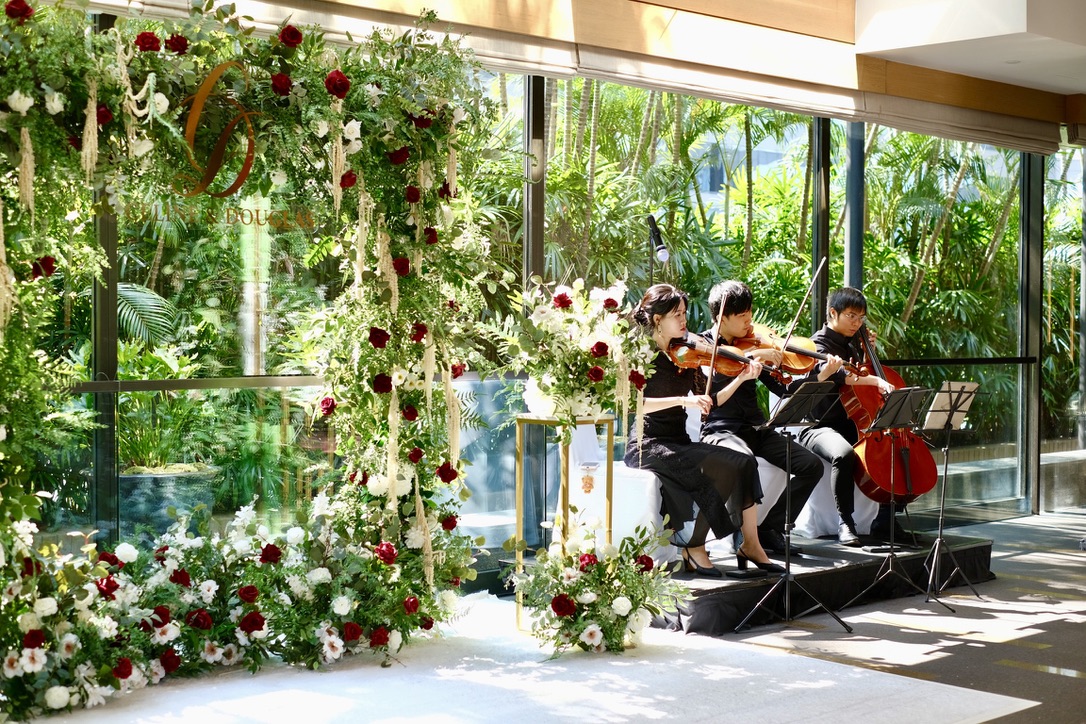
An early set can establish a warm, welcoming atmosphere while guests find their seats or greet one another. Gentle classical favourites, film themes and tastefully arranged contemporary songs work well because they are familiar without demanding attention.
Plan when musicians should begin playing and how they will know guests are moving into the ceremony space.
Ceremony entrances and key cues
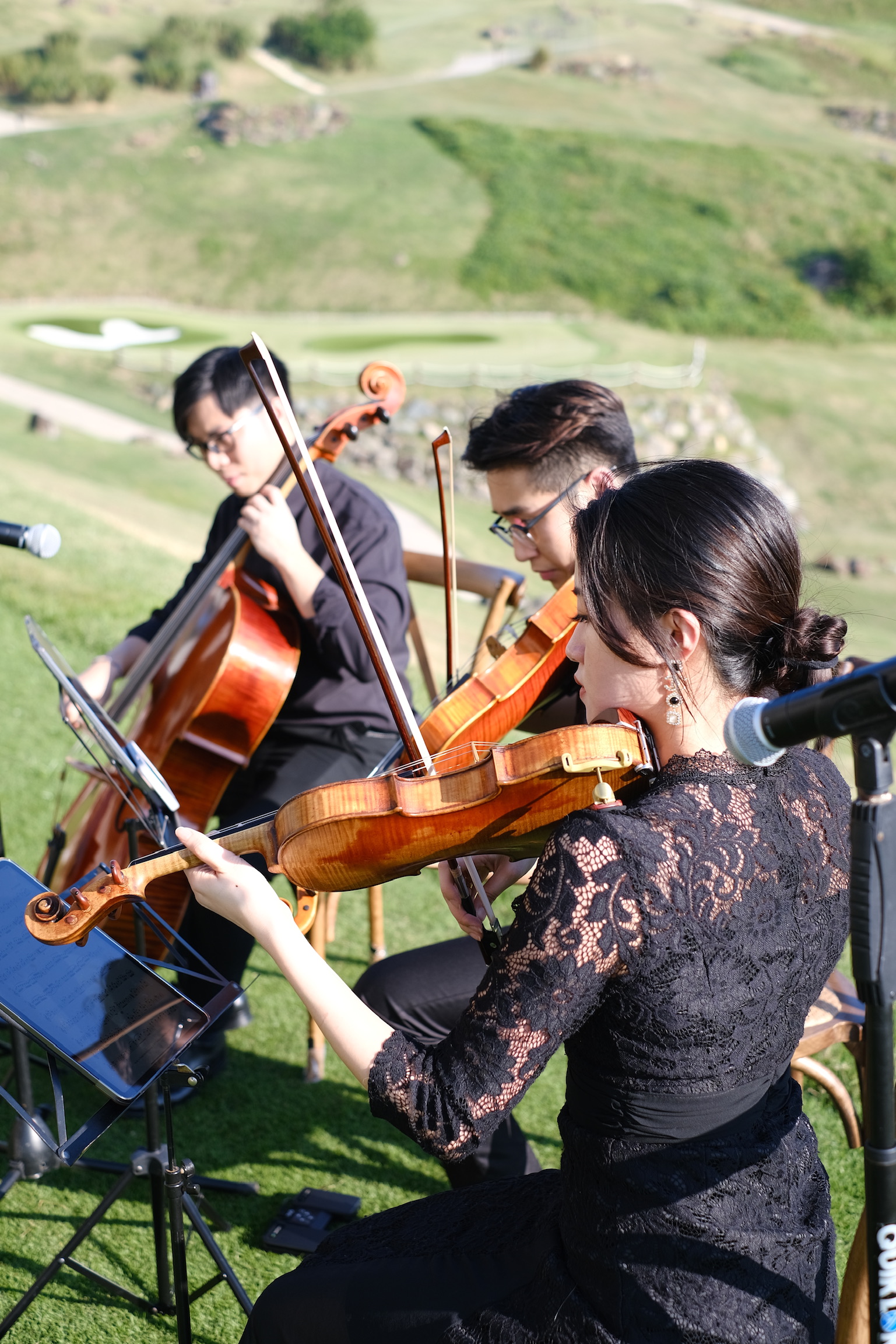
The processional requires more precise coordination than a background set. Identify the separate entries for the bridal party, the couple and any family members, and confirm who gives the cue to begin each selection.
Live performers can adapt the length of a phrase to the actual walking pace, then land on a musical cadence once everyone has reached position.
Banquet arrival and dinner
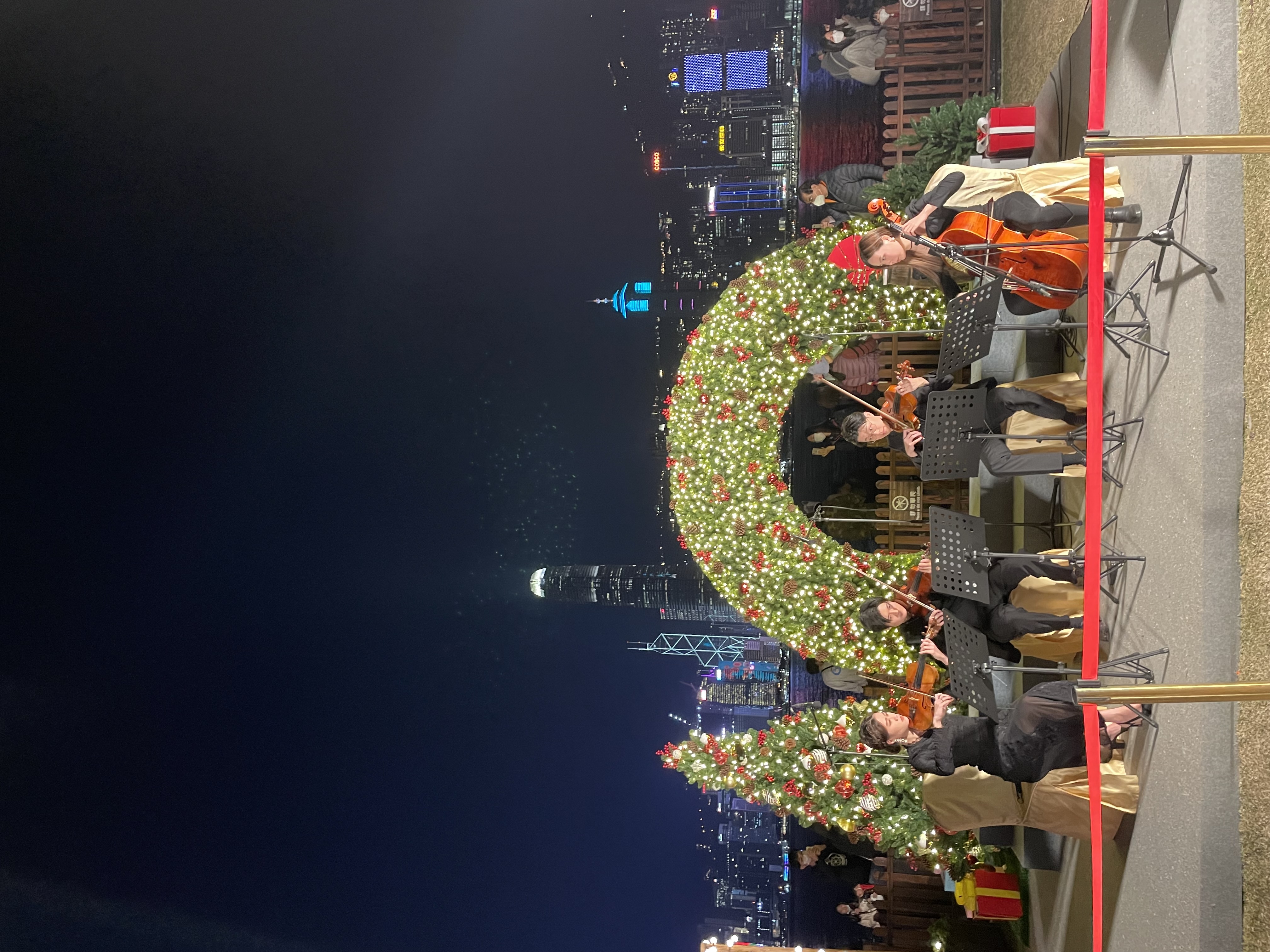
As guests settle for the meal, the music can become more atmospheric. A quartet adds warmth to a large room, while a duet or solo instrument may be appropriate in a smaller venue.
Consider the order of speeches and toasts. The ensemble should know when to stop, when to resume and whether there is a preferred musical introduction for special entrances.
Celebration and farewell
Towards the end of the evening, brighter and more recognisable music can provide a change of energy. A short closing piece is a graceful signal that the formal programme is drawing to a close.
Share a final version of the rundown with the performers, planner and venue, including contact details for the person calling the cues.
Plan your music with us
The perfect soundtrack begins with a conversation.
Tell us about your date, venue and favourite music. We’ll help shape an ensemble around your occasion.
Talk to the team